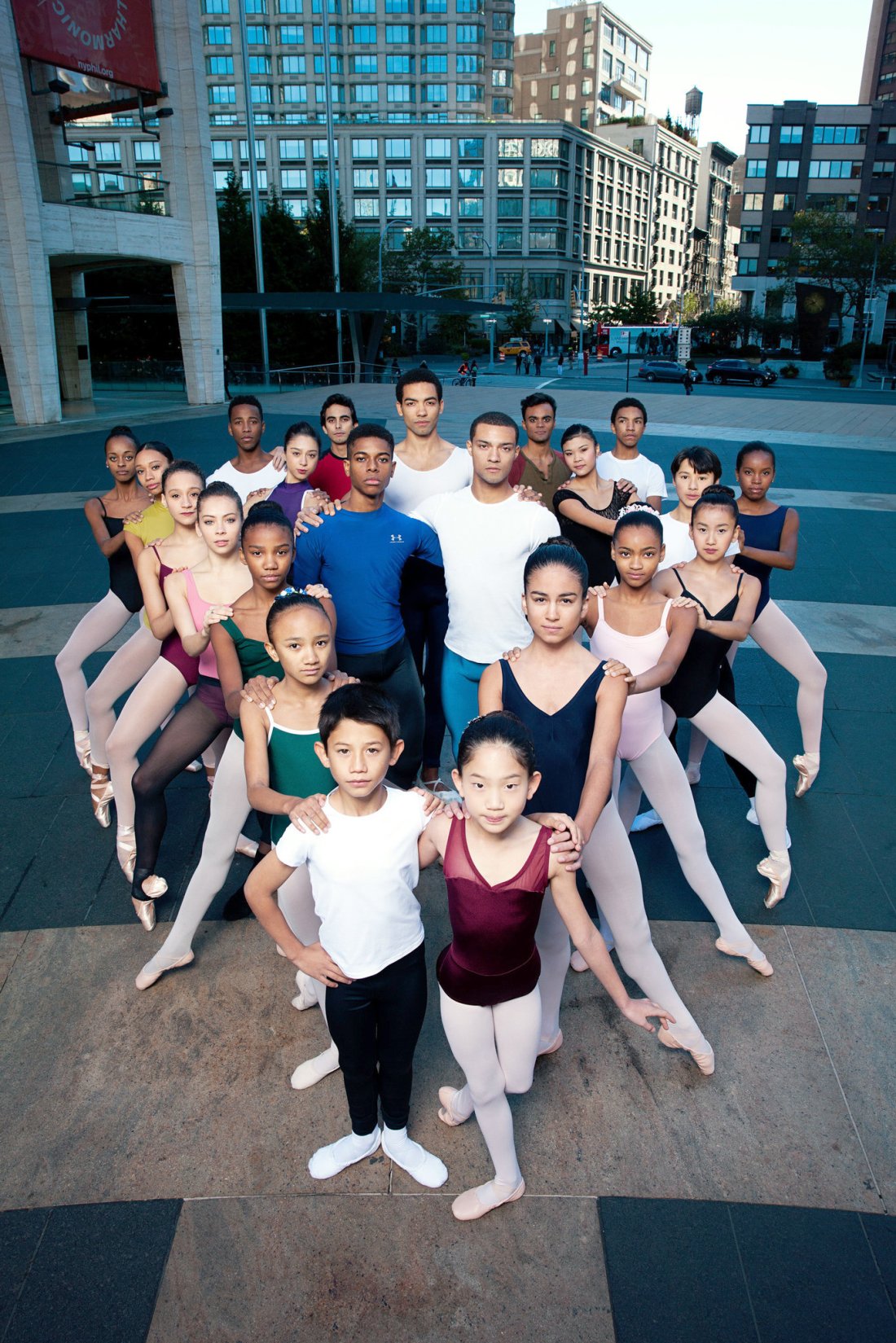
In the 21st century, dance is starting to take a turn towards a more diverse atmosphere with more black ballerinas coming about in companies around the world. Change is starting to happen and wheels are starting to turn. Katherine Brook’s article, “17 Ballet Icons Who Are Changing The Face Of Dance Today”, highlights the recent ballet dancers who are bringing forth change in the society of dance. Some of these dancers include Misty Copeland, the third African American female soloist, and first black principal dancer at the American Ballet Theater; Shannon Harkins, the only black female in Level 7 at the Washington School of Ballet; and Aesha Ash, the first black female ballet dancer at the New York City Ballet. These ballet icons are turning around the image of “pale princesses and fair swans” and changing the face of ballet. Taking a look into the personal lives of each of these dancers, we come to find out that their success was not easy coming and the discrimination against the color of their skin still exists with the best of the best. Poppy Harlow’s article, “Misty Copeland says the ballet world still has a race problem and she wants to help fix that”, published on CNN, argues that Copeland’s presence in no way erases the ballet worlds race problem but yet exemplifies the possibility for women of color to belong in the ballet world. Even with her undeniable talent and success, Copeland explains, “There’s not a day that goes by that I feel like this is normal — or that this should’ve happened for me”. Copeland grew up in a low-income family, living in a motel with her mother and five siblings. The possibility of becoming one of the most famous ballet dancers of the 21st century was nonexistent. Along with the economic barriers, Misty Copeland discovered limitations with her body image. Copeland argues, “I have a body that a lot of white dancers have and there are white ballerinas that are principal dancers that have larger chests than me and bigger muscles and broader shoulders and they are not told they don’t belong”. She also faced criticism in her flat feet and big hair that teachers from ballet companies merely expressed as impractical. In the American Ballet Theater production of Swan Lake, Misty Copeland danced the part of the Odeile. In the typical production, Odeile does 32 fouetté turns en pointe. It is considered one of the hardest and most challenging sequences in ballet. Copeland failed to perform these turns in her performance and received an overwhelming amount of backlash on social media. Kristina Rodulfo’s article, “Misty Copeland Pirouettes on Her Haters”, published in Elle, discusses Copeland’s surprising reaction to the criticism. Instead of becoming defeated, Copeland reposted the comments and thanked everyone who pointed out her mistake. She wrote on her post, “I’m happy to share this because I will forever be a work in progress and will never stop learning. I learn from seeing myself on film and rarely get to. So thank you”. The hateful comments arise a lot of tension. Were the comments truly pointed at her mistake or her skin color?
So what happens now? Gia Kourlas’ article, “Push for Diversity in Ballet Turns to Training the Next Generation”, examines the next steps that ballet companies are taking to ensure the spread of diversity. Is the ballet world really changing even in the overwhelming white presence? Kourlas argues that it is for sure changing. Organizations such as The Rockefeller Brothers Fund, the Ford Foundation, and the Andrew W. Mellon Foundation are bringing in money to finance the diversity issue. Black ballerinas on stage are changing the typical audience members to people of color. Ballet Theater’s Jacqueline Kennedy Onassis School and the School of American Ballet are creating programs to recruit minority groups at young ages. The ballet master of City Ballet and chairman of the School of American Ballet asserts, “We are not a white company, we don’t seek to be a black company. We don’t seek to be half and half. I just want to be American”. America has been known as the ultimate melting pot for a historically long time. The diversity that is found on American soil is vast. A Traditional American Ballet Company would mean people of all different races, backgrounds, and social classes. No more hierarchy. No more discrimination. The barriers are beginning to break. The skin color is beginning to dissolve and the focus is shifting towards the ability each dancer brings to the table. Mr. Farley, apprentice of the New York City Ballet, insists, “It’s about the particular person and about their particular gifts and the dancer’s race and their socio-economic background and their parents’ education — all of that is secondary or tertiary”. Professional companies are bringing hope to the new era of diverse ballet.

 Ellie's Blog
One thought on “A New Era”